
One step back, two steps forward…
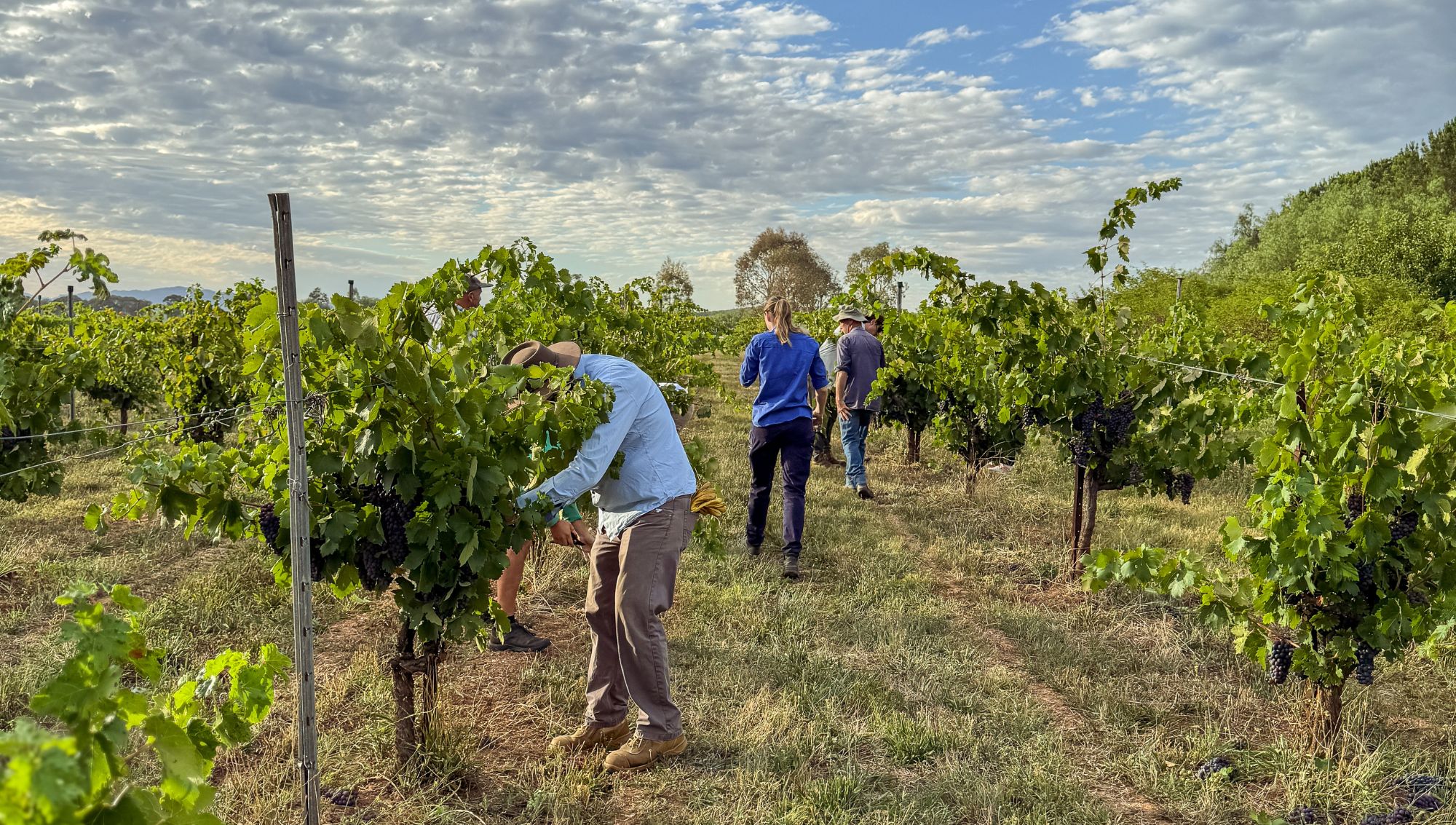
In the weeks leading up to Harvest, we undertake a practice that almost seems criminal – crop thinning. Armed with secateurs and a careful eye, our team remove fruit from the vines, with the aim of helping only the best bunches reach full maturity.
Our Zinfandel vines are known to be over-achievers, consistently producing more fruit than they can realistically handle. They are also notorious for producing a secondary crop, which means they are prone to uneven ripening. By removing under-developed growth and secondary bursts, we can bring some balance back to the vines.
Although not a practice solely for our Zinfandel, we carry out thinning across the majority of our vines – giving all the helping hand they need to produce the best possible product.
Crop thinning – put simply – is the practice of removing counter-productive growth. Through thorough inspection, bunches are removed that are reducing airflow, impacting other bunches or structures, or are just taking energy from the vine where they are unlikely to ripen adequately. By removing this fruit, we can allow the vines to direct their energy into the fruit that is the strongest. The result is a crop that is consistently ripened and developed –meaning the absolute best representation when it makes its way into the bottle.
Things were a little different this year…
This season, due to late frosts after budburst, the vines required more robust thinning than is usually the case. With the frost having impacted the budburst, the vines developed secondary and even tertiary canes – resulting in a lot of fruit all being at different developmental stages.

Removing a secondary, un-ripe growth
Why we ‘drop’ fruit
- The grapes are comparatively new (this is called a secondary crop), which take unnecessary amounts of energy from the vines. This happens at fruit set, and then again, every time we hedge (probably 3-4 times a season).
- Fruit is unlikely to ripen by the time harvest rolls around. Zinfandel produces MASSIVE bunches that can sometimes weigh up to 1kg/bunch! This makes it a big ask for the vine to ripen them even before there is a secondary crop in the equation.
- There are many bunches all on one, less-viable/thin secondary canes that cannot support the weight of the fruit.
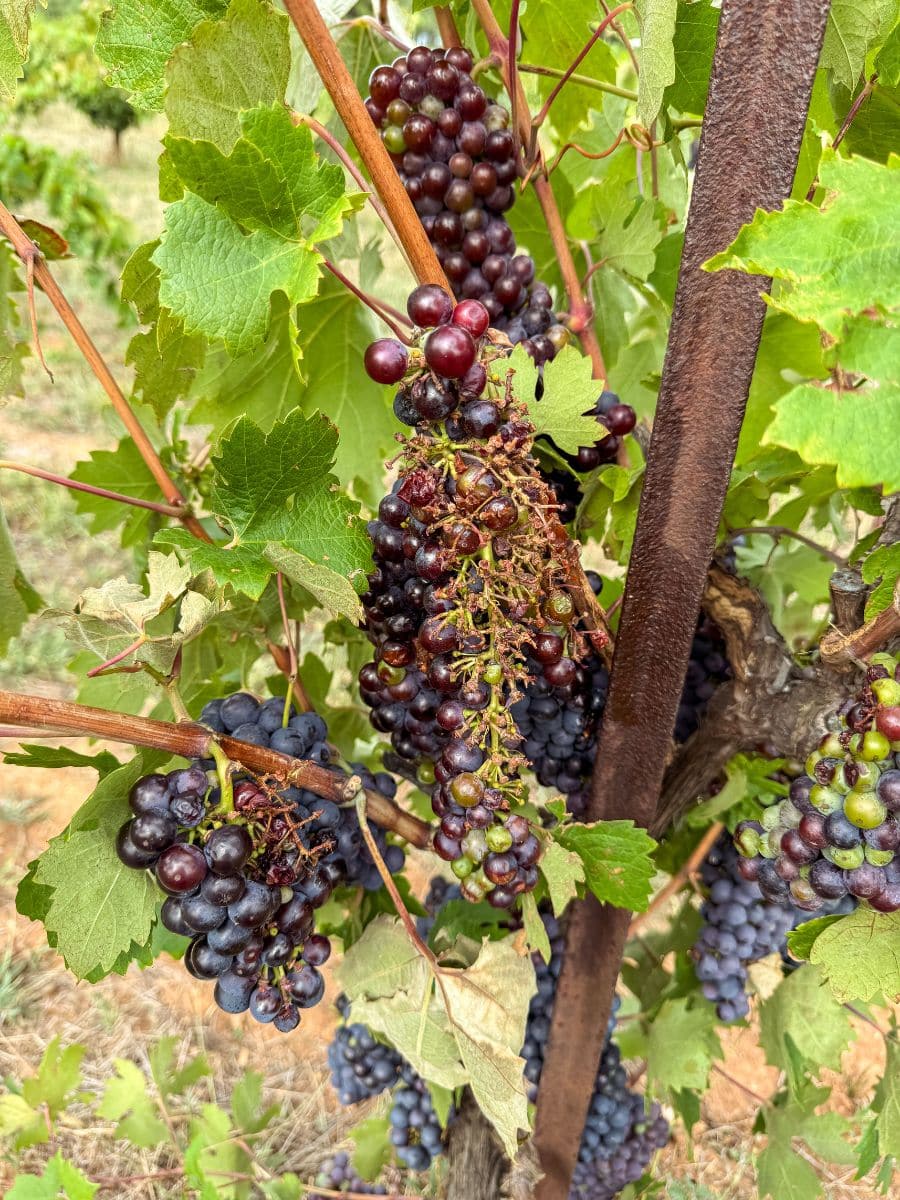
- Bunches are massive and can sometimes grow on top of each other in a bush vine system. This reduces airflow, and, due to their weight, individual berries become damaged and leak sugary juice into the centre of the bunches. This results in the perfect conditions for diseases like botrytis and sour rot to take hold.
- Bunches are damaged, either by pests (the problematic birds peck the berries without removing the whole thing, which leaks the juice all over the bunch) or by friction (from adjoining bunches, canes, wind or even their stake!).
Next steps
Once the vines have been thinned, we then bring out the nets to cover the remaining fruit. The grapes that remain have been deemed to be the strongest and most viable, so the team will do everything that they can to protect them from any damage – and assist them to cross the finish line strongly.
The Nets
Timing is critical with netting – as it slows the ripening down because it alters the positioning of the leaves; it reduces airflow; and it increases humidity around the vines which can cause increased disease pressure in wet weather conditions. The roll-out of the nets also means we can’t get our machinery into the vines to keep the undervine area clear – further increasing the humidity and decreasing airflow.
An example of a damaged bunch