
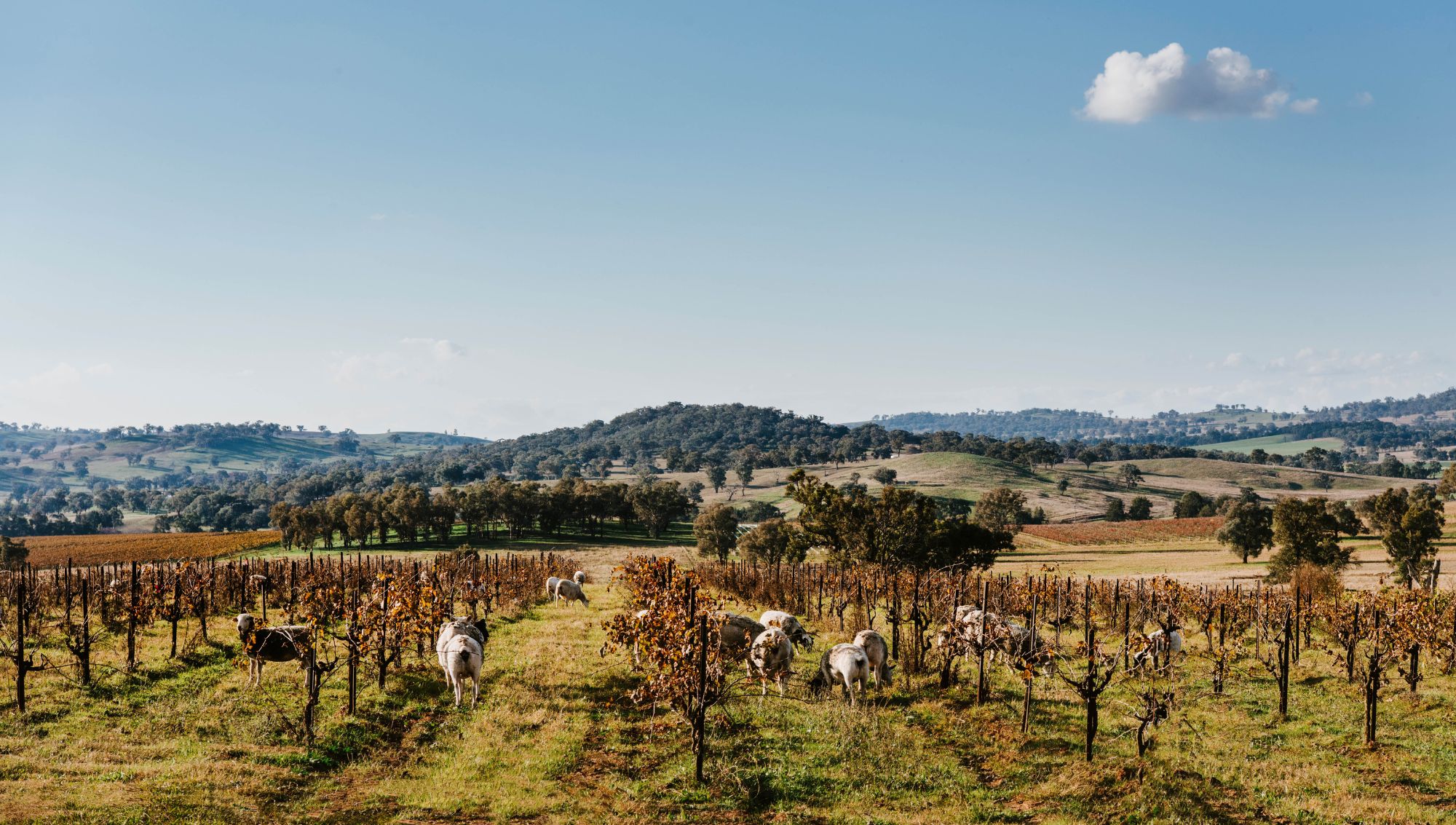
Our Tinja flock…
Across Tinja, all aspects of our farming are geared to work together, achieving resourceful harmony in our delivery of organic products. As part of The Zin House’s farm-to-table ethos, a small flock of Dorper sheep call our farm their home, providing a stable supply of meat for both the restaurant and Althea – but this isn’t the only service that they provide.
Over the last few years, biodynamics specialist & assistant vineyard manager, Kesh Mudaly, has been conducting trails on the benefits of rotational grazing in regenerative agriculture. The data & evidence of this trail has now been submitted to the Department of Primary Industry in Australia who will be distributing it to other farmers in NSW via their viticulture & horticulture handbook. For everyone else, you can get a quick insight into just how important a few sheep are to creating the wine we all love below…
During the winter months, our Tinja flock are put to use in the dormant vineyard, being utilised as effective and efficient pest & weed control. While our vines enter a period of dormancy, with no visible signs of life, our sheep enjoy working their way through the vineyard to clear away weeds and any pest-hosting vegetation, whilst helping to manage our cover crops that are sown in late autumn.
As the sheep move their way across Tinja, they also provide fertilisation through their manure; aerate the soil; and reduce the carbon footprint of our vineyard by increasing soil vitality and removing the need for our team to utilise farm machinery to care for the land.
Why Dorper Sheep?
Dorper’s are renowned for being one of the most economical sheep breeds, as they require minimal care (no need for shearing, crutching, etc.), have a high disease tolerance, are productive & versatile grazers, are high-yield in meat, and are very fertile (capable of 8-monthly lambing intervals).

Benefits of Rotational Sheep Grazing
Weed & Pest Control: Sheep are efficient weed and pest controllers. Their grazing habits help manage cover crops and remove unwanted vegetation (pest host-plants and competitive weeds) from the under-vine and between vine rows. This promotes a healthier vineyard ecosystem and reduces overall environmental impact.
Fertilisation: As the sheep graze, they deposit organic matter in the form of manure, enriching the soil with essential nutrients, and simultaneously trample down the cover crop into the soil which helps the plant material break down and feed the soil. This natural fertilisation improves soil structure, increases microbial activity, and enhances nutrient availability for the vines.
Soil Health: Rotational grazing promotes soil aeration, which is crucial for maintaining soil health and water infiltration. The activity of sheep hooves helps to break up compacted soil, allowing roots to penetrate deeper and access nutrients more effectively. Healthy soil contributes to vine resilience and productivity over the long term.
Carbon Sequestration: By incorporating organic matter into the soil through manure deposition, increasing above & below ground plant production through grazing, and reducing the need for tillage in the vineyard, sheep grazing contributes to carbon sequestration. This helps mitigate the effects of climate change by reducing greenhouse gas emissions and reducing the vineyard’s overall carbon footprint.
The sheep are introduced to the vineyard after around 90% of the leaves have fallen in late autumn, and will be removed before budburst as they will look to eat the new growth directly off the vines. By combining rotational sheep grazing with our other practices, such as cover crops & biodynamic sprays, we have been able to improve the soils water holding capacity, increase its carbon levels, and reduce the weed competition - all of which result in an even more sustainable and fruitful vineyard.
Kesh Mudaly – Resident Biodynamic Specialist & Assistant Vineyard Manager
Outcomes & Impacts of Our Trials
Improved Soil Quality: Soil tests reveal increased organic matter, microbial activity, and nutrient levels in vineyard soils, indicating improved soil fertility and health.
Reduced Input Costs: Eliminating the need for off-farm inputs such as organic fertilisers, and reduced tractor hours & diesel usage, has resulted in cost savings while high-quality grape production is maintained.
Fewer Weeds with Reduced Vigour: Each year fewer weeds are seen in the vineyard, and those that do come up are less competitive with the vines and are easier to remove from the under-vine area.
Profitability: Livestock profits come from maintaining retail pricing when supplying meat to our restaurant, function centre, and in-town bakery. This means LFWC controls the entire process, from raising to direct consumer sales.
Enhanced Wine Quality: The symbiotic relationship between healthy soils, diverse ecosystems, and grapevines has translated into wines with greater complexity, depth, and expression of terroir. Yield has increased by 25% without a compromise in quality.

A side-by-side before and after
Come see it for yourself
With a flock of around 30 rotating around the farm with their portable fencing and water setup, be sure to keep an eye out for them next time you visit Tinja over the next few months. If you’re keen to learn more feel free to get in touch with our team directly, or stop by our cellar door any day of the week to taste the fruits of their labour!